Category: Roofing Guides

  • What Hail Damage Looks Like on a Roof (Complete Homeowner Guide)

    What Hail Damage Looks Like on a Roof (Complete Homeowner Guide)

    Hailstorms can cause serious problems for homeowners, especially when the damage isn’t immediately obvious. Many people don’t realize they have roof hail damage until leaks or structural issues begin to appear.

    Understanding how hail affects your roof and what signs to look for can help you act early and avoid costly repairs. In this guide, we’ll break down exactly what hail damage looks like, how to identify it, and what to do next.

    What Is Roof Hail Damage?

    Roof hail damage occurs when hailstones strike your roof with enough force to weaken or break roofing materials. The severity depends on factors like hail size, wind speed, roof age, and material type. Even small hail, especially when combined with strong winds, can lead to long-term roof damage from hail.

    What Does Hail Damage Look Like on a Roof?

    One of the most common questions homeowners ask is: What does hail damage look like on a roof? The answer can vary depending on your roofing material, but there are several clear signs that indicate roof hail damage.

    In most cases, hail damage on a roof appears as random impact marks rather than uniform wear. Unlike normal aging, hail roof damage is scattered and inconsistent, often affecting certain areas more than others.

    1. Bruised or Soft Spots

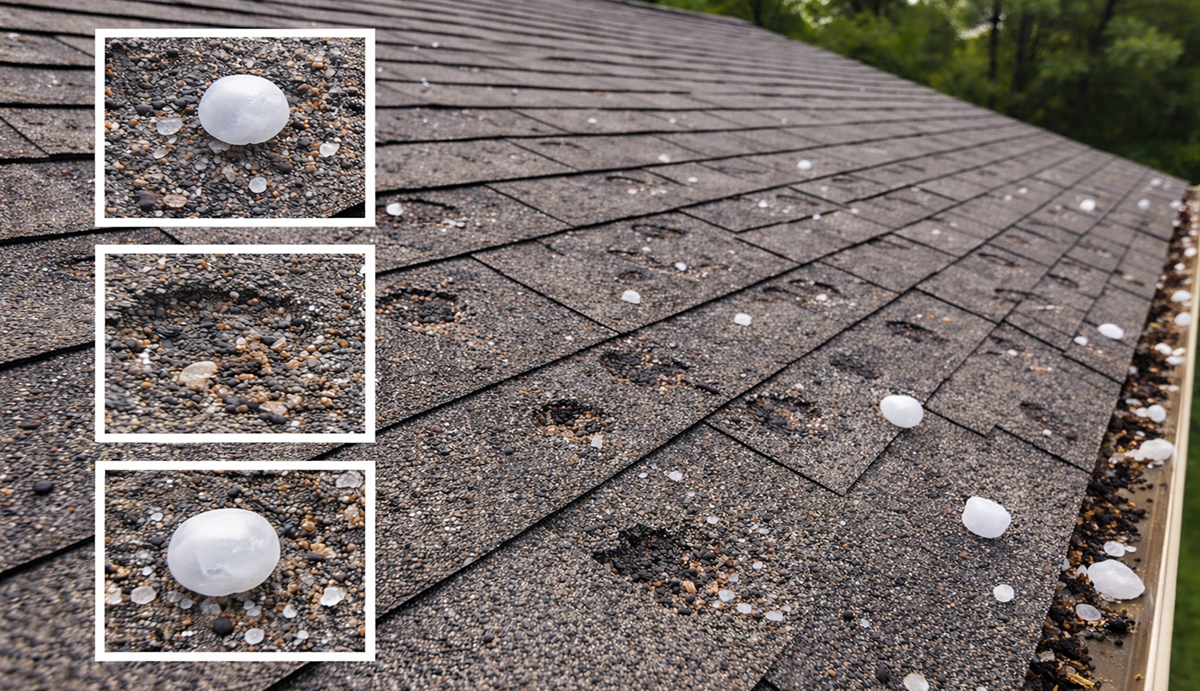
    Hail impacts can create soft, dark spots where protective granules have been dislodged. These bruised areas may feel spongy when lightly pressed and indicate underlying damage to the shingle structure.

    2. Granule Loss

    Granule loss is one of the most common signs of roof damage from hail, especially on asphalt shingles. When these protective granules are knocked off, the inner layers become exposed, increasing the risk of UV damage and leaks.

    3. Circular Impact Marks

    Small, round dents or impact marks are classic indicators of hail damage on a roof. These marks are typically scattered across the surface and vary in size depending on the hailstones.

    4. Cracks or Splits

    In more severe cases, shingles may crack or split due to a strong impact. This type of damage is more common during storms involving both wind and hail damage to roof systems, where wind increases the force of impact.

    5. Exposed Underlayment

    In extreme situations, hail can break through the top layer of shingles, exposing the underlayment beneath. This is a serious form of hail damage that requires immediate attention to prevent water intrusion.

    How Severe Can Roof Hail Damage Be?

    Not all roof hail damage is the same. The level of damage can vary depending on the size of hail and storm intensity.

    Minor damage may include light granule loss or small dents that don’t immediately cause leaks. Moderate damage often involves bruising, cracks, or partial shingle failure that can lead to water intrusion. Severe hail damage includes broken shingles, exposed underlayment, and widespread impact areas that may require full roof replacement.

    Understanding the severity helps homeowners decide whether repairs or full replacement is necessary.

    What Does Hail Damage Look Like on Shingles?

    If you’re wondering what hail damage looks like on roof shingles, these signs usually appear unevenly across different areas rather than in a consistent pattern:

    • Dark or shiny spots where granules are missing
    • Random, inconsistent damage patterns
    • Edges of shingles appear worn or chipped  

    Signs of Hail Damage to the Roof You Shouldn’t Ignore

    Recognizing early warning signs can save you thousands in repairs. Key signs of hail damage to the roof include:

    • Water stains on ceilings or walls
    • Loose or missing shingles
    • Debris buildup in gutters
    • Dented vents, flashing, or skylights

    If you notice any of these, it’s a strong indication of hail damage on a roof that needs attention.

    How to Tell If Roof Has Hail Damage

    Many homeowners ask, how to tell if the roof has hail damage without climbing up or risking injury.

    Here are safer ways to check:

    Quick Roof Hail Damage Checklist

    • Dents or marks on shingles, vents, or gutters
    • Granules collecting in downspouts
    • Cracked or missing shingles
    • Water stains inside your home
    • Damage to nearby outdoor items

    If you notice multiple signs, there’s a strong chance of hail damage on a roof.

    Ground Inspection

    Walk around your home and look for:

    • Shingle pieces on the ground
    • Dents in gutters or downspouts
    • Damage to siding or windows

    Check Outdoor Items

    Hail doesn’t just hit your roof. Look at:

    • Cars
    • Outdoor furniture
    • AC units

    If these are damaged, your roof likely has issues, too.

    How to Spot Hail Damage on the Roof Safely

    If you want to know how to spot hail damage on roof, focus on visible indicators without risking your safety.

    • Use binoculars to inspect from the ground
    • Look for uneven patterns (hail damage is random, not uniform)
    • Check roof valleys and slopes where impact is stronger

    For a more accurate assessment, professional inspections are always recommended. However, not all hail damage is immediately visible after a storm.

    How to Know If Your Roof Has Hail Damage Over Time

    Sometimes, hail damage on a roof doesn’t show immediate symptoms. Instead, problems develop gradually.

    Here’s what to watch for over time:

    • Slow leaks appearing weeks or months later
    • Mold or mildew growth in the attic
    • Increased energy bills due to poor insulation
    • Shingles deteriorating faster than expected

    If you notice these delayed signs, your roof may have hidden damage from a previous storm.

    Hail Damage on Different Roofing Materials

    Asphalt Shingles

    The most common type of roofing. Hail damage to roof shingles usually includes:

    • Granule loss
    • Bruising
    • Cracks

    Metal Roofs

    With a hail-damaged metal roof, you’ll typically see:

    • Dents or dings
    • Cosmetic damage (may not affect performance immediately)

    Other Materials

    Tile or wood roofs may:

    • Crack or break under impact
    • Require immediate replacement if damaged

    Can Wind Make Hail Damage Worse?

    Yes. Storms often include both wind and hail damage to roof systems.

    Wind can:

    • Lift shingles, making them more vulnerable
    • Increase the impact force of hail
    • Spread damage across a larger area

    This combination often leads to more severe structural issues.

    What to Do If You Suspect Hail Damage

    If you think your roof has been affected:

    1. Inspect safely from the ground
    2. Document visible damage (photos help with insurance)
    3. Schedule a professional inspection
    4. Avoid delaying repairs, as damage worsens over time

    If you’re unsure about the extent of damage, getting a professional inspection from an experienced roofing company can help identify hidden roof hail damage and prevent costly future repairs.

    Local Considerations for Hail Damage

    Hailstorms are especially common in regions like Colorado, where changing weather patterns can lead to sudden and intense storms.

    Homeowners in areas such as Lakewood and Highlands Ranch often experience frequent hail events, making regular roof inspections essential after major storms. Addressing issues early can prevent long-term structural damage and costly repairs.

    Does Hail Damage Affect Roof Lifespan?

    Yes, roof damage from hail can significantly reduce the lifespan of your roofing system. Even if the damage seems minor, it can weaken the protective layers of your roof.

    Over time, this can lead to:

    • Premature aging of shingles
    • Increased vulnerability to future storms
    • Higher maintenance and repair costs

    Regular inspections after storms help extend your roof’s lifespan and prevent long-term issues.

    How to Prevent Future Roof Damage from Hail

    While you can’t stop hail, you can reduce its impact:

    • Install impact-resistant shingles
    • Schedule regular roof inspections
    • Maintain gutters and drainage systems
    • Replace aging roofing materials

    Preventive care is key to minimizing future roof damage from hail.

    Will Insurance Cover Hail Damage to Your Roof?

    In most cases, homeowners’ insurance policies cover hail roof damage. However, the process depends on proper documentation and timely action.

    To improve your chances of approval:

    • Take clear photos of visible damage
    • Note the date of the storm
    • Schedule a professional inspection
    • File your claim as soon as possible

    Delaying action can result in claim denial, especially if the damage worsens over time.

    Conclusion:-

    Hailstorms can cause serious damage to your roof, often in ways that aren’t immediately visible. Learning how to identify roof hail damage early is crucial to prevent costly repairs.

    If you live in areas like Lakewood or Highlands Ranch, it’s a good idea to schedule a professional roof inspection after a storm. Our team at Gorilla Roof provides expert inspections and repairs, ensuring your roof stays in top condition and your home remains protected.

    Visit us today at Gorilla Roof to request a free inspection or learn more about how we handle hail damage professionally.
  • Commercial vs. Residential Roofing: Key Differences Explained

    Commercial vs. Residential Roofing: Key Differences Explained

    An Overview: The selection of roofing material plays a very crucial role for all property owners. Whether it is a residential property owner or a commercial property owner, having knowledge related to commercial versus residential roofing shingles will aid in making all the correct decisions pertaining to its robustness and expenditure.

    In this guide, we will walk you through the key differences in types of roofing between a commercial and residential property. Understanding the difference will give you insight into which one is best suited to your needs.

    What About Commercial vs. Residential Roofing?

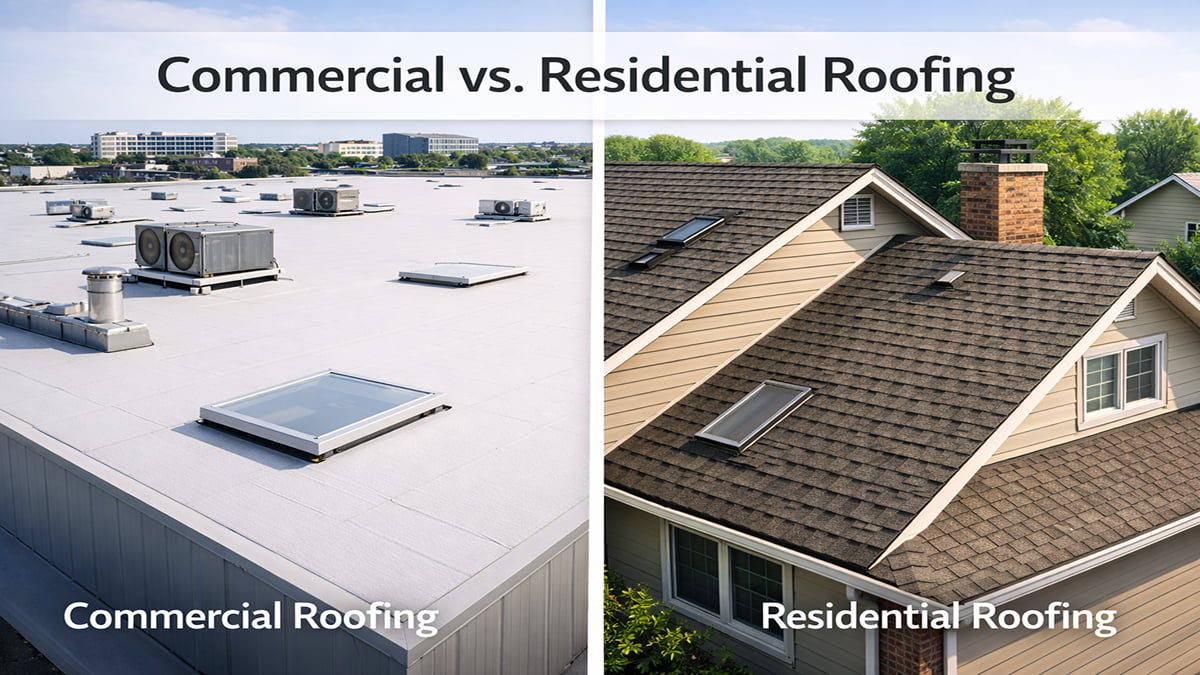
    The major difference between a commercial and residential roof is functionality that is dependent on the structure. Commercial and residential buildings are built differently, although their purpose is similar in shielding the structure.

    Rooftops: It is a commercial roof, which makes it ideal for usage in larger projects like office buildings, warehouses, shopping malls, and factories.

    Residential roofs would be for residential houses as well as small residential buildings.

    This knowledge will greatly help property owners in recognizing the differences in the types of roofs so that they can choose the best roofing solution.

    Commercial Roofing System Descriptions

    Commercial roofing is made to last, tending toward longevity.

    Normally, such roofs cover very large areas and are flat or low-sloping with a substantial load-carrying capacity for a lot of equipment.

    Common varieties of commercial roofs:

    • TPO: Thermoplastic
    • EPDM stands for Rubber Roofing.
    • Modified Bitumen
    • Metal Roofing
    • Built-Up Roofing(BUR)

    Defining Characteristics:

    • Flat or low-slope roofs 
    • High-resistance performance against weather and UV radiation 
    • Built for long-term durability 
    • Requiring professional roof installation 

    In most cases Organizations will tend to turn to commercial roofing contractors for the inspection, repair, or maintenance that may be needed to prevent an interruption in their business.

    Residential Roofing Systems Explained

    The main objective of the roofing systems in houses is to create security for the houses while at the same time improving their appearance. The roofs are typically much steeper, with materials that can offer aesthetic value in addition to durability.

    The commonly found roofing materials for a residence include:

    • Asphalt Shingles
    • Metal Roofing
    • Tile roofings
    • Wood Shakes

    In general terms, it is easier to access and service roofing systems for residences. Many people need roofing services for their residences to inspect, repair, upgrade, and replace them.

    If you are looking for the best roofing contractors for residential roofs, look for professionals who understand the local weather patterns and also receive good customer reviews.

    Commercial vs Residential Roofing: Major Differences

    Below is a list of key differences between commercial and residential roofing:

    1. Roof Design & Structure:

    • Commercial roofs can be flat or low-sloped.
    • The residential roofs are steep & angled.

    2. Materials Used:

    • Commercial roofs are made of membranes and durable materials.
    • Domestic roofs can either be tiled or shingled.

    3. Installation Process:

    • The installation of commercial roofs needs specialized tools and personnel.
    • Installation in residential buildings is faster and easier.

    4. Maintenance Needs:

    • Commercial roofs require periodic checks and professional servicing.
    • The roof on a residence needs to be maintained on a less frequent but not sporadic basis.

    Commercial Roof Maintenance vs. Residential Roof Maintenance

    Most people do not know that Proper maintenance helps to extend the life of all roofs.

    Commercial Roof Maintenance:

    • Regular inspections
    • Drainage system cleaning
    • Seam and Membrane Checks
    • Preventive Repairs

    Companies usually turn to the services of a commercial roof maintenance program to save on expenses in the long run.

    Residential Roof Maintenance:

    • Indiana Shingle Inspection 
    • Gutter cleaning 
    • Leak Detection 
    • Seasonal inspections 

    Homeowners can benefit from residential roof maintenance to avoid costly repairs later.

    Commercial and Residential Roof Repair Services

    Damages on the roof can be caused by many factors, such as storms, aging, and wear and tear at any time.

    Commercial Roof Repair Services:

    Businesses often seek professional assistance for:

    • Damage to the membrane
    • Leaks and water accumulation
    • Structural wear

    Quite a number of property owners seek commercial roof repair services in Denver that can efficiently undertake large-scale or urgent repairs.

    Residential Roof Repair Services:

    Homeowners may need:

    • Shingle replacement
    • Repair of leaks
    • Storm damage restoration

    Services such as residential roof repair in Denver and emergency roof repair service in Denver will save houses from unexpected damage.

    Market Differences: Cost and Lifespan

    Commercial roofing is usually much more expensive initially, but it provides service for a longer time due to the durability of the materials. Residential roofs could be cheaper to install but may need to be replaced sooner, depending on the choice of material. 

    Both types stand to benefit from timely inspections and professional service from a trusted roof repair service provider.

    Picking the Best Roofing Service Provider

    When hiring a contractor, ensure they haveexpertise in both commercial and residential roofing contracts. A good roofing contractor should possess the following qualities:

    • Licensed and insured professionals
    • Emergency repair services
    • Maintenance programs 
    • Clear pricing practices

    Reputed service roofers will offer the best work possible.

    Why Professional Roofing Services Are Needed

    Experienced roofers are familiar with building regulations and safety specifications. Commercial roof installation or even residential roof repair work requires specialized hands. This is where professional roofers come in handy.

    Conclusion:

    The knowledge of the distinction between the basic differences of commercial roofing shingles and residential roofing shingles provides important information for deciding. 

    Every system has its requirements. No matter whether it is related to commercial roofing, repairs for residential roofs, or even maintenance, the right people make all the difference.

    Through partnership with a trusted and experienced roofing firm, the safety and efficiency of your property for the future will be assured.

  • How Much One Bundle of Shingles Covers in Denver

    How Much One Bundle of Shingles Covers in Denver

    When it is time to roof, many homeowners have wondered about the coverage area that one roof shingle bundle will cover. Understanding the coverage area is crucial in knowing the cost and time required during roofing installation service delivery. Whether you’re doing a repair or a replacement roof, you need to know the coverage area.

    It is advisable to consult professional roof installation teams, such as Gorilla Roof, in order to determine the exact number of bundles for roof installation.

    How Much Does One Bundle of Shingles Cover?

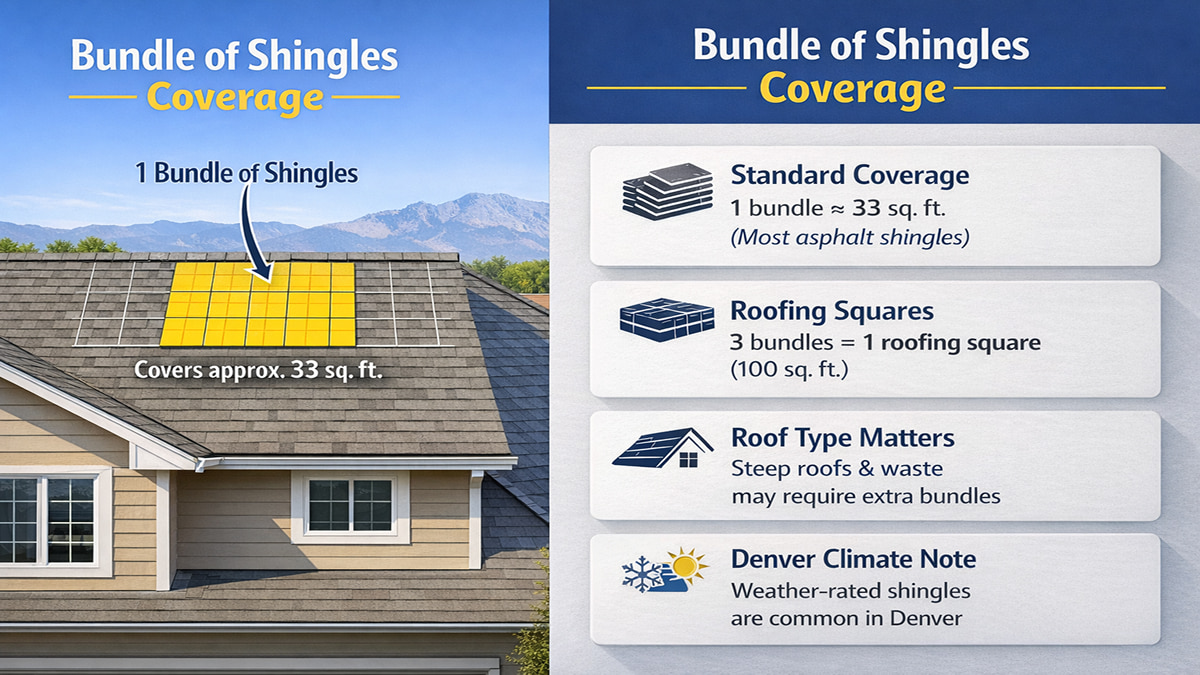
    An average bundle will cover 33 square feet. Roofing materials are calculated by the square foot.

    Roofers measure material needs by:

    • 1 Roofing Square = 100 Square Feet
    • 3 bundles = 1 roofing square

    A good roofing contractor in Denver would be able to verify the precise number of bundles required for your roof based on the roof shape and pitch.

    How Much Roof Does a Bundle of Shingles Cover in Real Life?

    When asking how much roof a bundle of shingles covers, the coverage is modified by factors like roof pitch, valleys and ridges, and other features that may interfere with roofing, including chimneys or skylights.

    Scheduling a roof inspection in Denver will help you find these factors, ensuring you do not overbuy shingles that you would have otherwise spent too much money on.

    How Much Will One Bundle of Shingles Cover After Waste?

    The cutting of shingles for edges and roof features produces waste. A few contractors recommend adding 10–15% extra shingles.

    For instance:

    • A 1,500 sq ft roof = 15 squares
    • Number of bundles required = 45
    • When waste = 50 – 52 bundles

    This is part of the planning involved, making a Denver roof replacement more efficient and not having delays in installation.

    Understanding Roof Structures: Rafters vs. Trusses

    Many homeowners have often wondered what the difference is between rafters and trusses.

    • Rafters are constructed on the site and enable more space in the attic.
    • The truss is pre-manufactured and readily erected.

    It becomes important to understand the roof structure aptly for the safe installation of the roof at a lower cost, which can be done by experts at Gorilla Roof.

    Exactly How Far Apart Do You Place Gutter Hangers?

    Gutters safeguard your roof as well as your foundations. It is very important to maintain the correct spacing.

    • Standard spacing: 24-36 inches
    • Areas with heavy snow may need a tighter spacing

    Proper installation ensures the longevity of the roof and minimizes maintenance when it comes to a Denver roof repair.

    Hail Damage Roof Insurance Claim Colorado Springs

    Thunderstorms in the state of Colorado have the potential of damaging roofs fast. In most cases, homeowners will look for information regarding hail damage roof insurance claims in the state of Colorado Springs.

    An inspection by a roofing company, one that the residents of Denver trust, helps establish damage and make an insurance claim.

    Commercial Roofing Denver by Peak to Peak Roofing

    A commercial roof needs particular attention. Commercial roofing by Peak to Peak Roofing in Denver emphasizes durability, drainage, and performance.

    Whether it is a commercial installation or a residential one, quality installation is only possible with an experienced roof installation service .

    Final Observations on Shingle Coverage and Roofing Preparation

    Effective planning will provide answers regarding the amount of coverage offered per roof installation while avoiding errors and unnecessary costs. Whether it is roofing, gutters, or commercial roofs, the key to success is knowledge.

    Professional advice from a roofing company that homeowners in Denver trust will ensure that work is done efficiently, effectively, and with great results. Organizing a roof inspection in Denver before commencing work will ensure that your roof is ready for any type of weather.